

INTERNATIONAL STUDENTS AND PGWP – ALWAYS COMPLY WITH STUDY PERMIT CONDITIONS!
How does IRCC know if students work more hours than allowed?
This is one of the most common questions among international students.
The answer is clearly reflected in the PGWP refusal letter from a real case below:
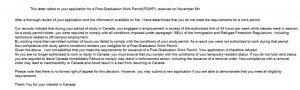
Basis for IRCC’s Refusal in This Case
The applicant worked more than 24 hours per week off-campus during the academic session. IRCC determined this was a violation of the study permit conditions: unauthorized employment during studies and non-compliance with immigration regulations, resulting in PGWP refusal.
Students must understand that PGWP eligibility is not assessed only at the time of graduation. It is evaluated throughout the entire study period, including compliance with work regulations.
How Does IRCC Detect Excess Working Hours?
IRCC may cross-check multiple sources of information, including:
- Payroll records and documentation from employers
- T4 slips, Records of Employment (ROE), and data from the Canada Revenue Agency (CRA)
- Employment history linked to your Social Insurance Number (SIN)
- Information provided directly by employers
- Inconsistencies between previous and subsequent applications
International Students Must Understand:
- Work-hour limits are mandatory, not optional
- Employer permission does not override IRCC regulations
- Even short-term or unintentional violations can have serious consequences
In Summary:
- PGWP approval is not based solely on graduation, but also on full compliance with study permit conditions throughout your academic program.
- Even one violation of work regulations can jeopardize your PGWP eligibility and your future permanent residency pathway.
Understand the law and comply with it from the beginning to avoid unnecessary risks.
Ton That Hoa, RCIC-IRB
Special thanks to Ankita Goyal, RCIC-IRB, for her valuable contributions.